
Why use a line sheet for your brand?
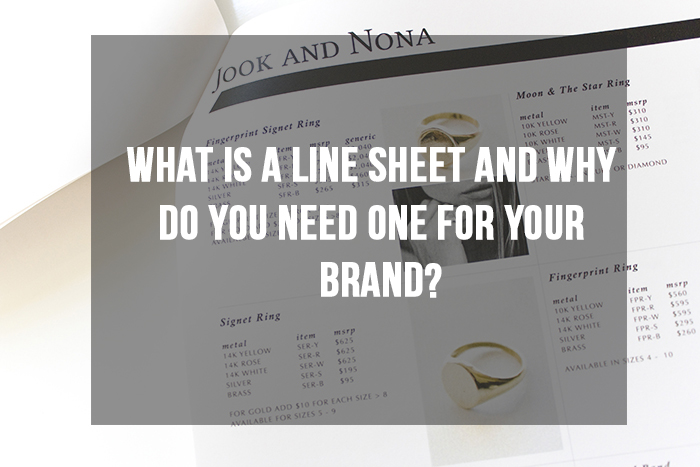
Here is the test for a line sheet: hand it to a buyer who has never seen your brand, and they should be able to build a complete order without asking you a single question.
Most line sheets fail that test. The products look good, and then there is nothing telling the buyer the minimum order, when it ships, or how to pay. This is a field-by-field guide to what belongs on one, and the omissions that cost you orders.
If you are still deciding which document you need — line sheet, lookbook or full catalogue — start with our guide to the four catalogue types and come back here once you know it is a line sheet you want.
What goes against each product
- Product name — how you refer to the style, consistently, everywhere
- Style or item number — this is what ends up on the purchase order, so it has to be unambiguous. The most commonly omitted field, and the one that generates the most back-and-forth email
- A clean product photo on a seamless background — one per style, same crop and lighting across the whole sheet
- Wholesale price, per unit, expressed as “each”
- Suggested retail price — buyers work in margin, and showing the RRP does that arithmetic for them instead of making them do it
- Variants — colourways, materials, and the size run if you sell in packs
- Case pack or minimum per style — how many units make a sellable unit
- Composition and country of origin — required by some retailers, and a selling point if it is a good story
What goes on the sheet as a whole
This is the half that gets forgotten, and it is the half a buyer checks first.
- Minimum order value or quantity — genuinely the first thing most buyers look for. Leave it off and they assume the worst
- Season and order window — which season this is, and by when they need to commit
- Delivery window — when stock actually ships, not when you hope it will
- Payment terms — proforma, net 30, whatever applies. Say it up front rather than negotiating later
- Currency, stated explicitly if you sell across borders
- An expiry date on the sheet itself — so last season’s prices stop circulating in inboxes
- Contact details and how to order — email, portal, rep, whatever it is
What makes a buyer order from it
Lead them. Buyers appreciate direction and most brands don’t give any. Flag the new styles, mark the best sellers, show what coordinates with what. A small banner on a product photo does more work than a paragraph of copy.
Make it scannable. A buyer may be working through thirty brands in a week. Consistent grid, consistent photo treatment, prices in the same position on every row. Anything that makes them hunt costs you.
Send a PDF. Not a link that expires, not a folder of images, not a spreadsheet with photos pasted in. One PDF they can forward internally, annotate and print. If you are showing at a trade show, bring it printed as well.
Give each style room. A twelve-page line sheet that reads cleanly beats a three-page one that doesn’t.
Six mistakes that stop orders
- No item numbers. The buyer cannot raise a purchase order from a product name alone.
- Wholesale price only. Show the RRP too, so the margin is visible at a glance.
- No minimum order stated. Buyers either assume it is unaffordable or move on.
- Styled, on-model photography. Beautiful, and wrong for this document — it makes styles hard to compare. Save it for the lookbook.
- Inconsistent photo treatment. Mixed backgrounds and crops make a collection look like a marketplace listing rather than a brand.
- No date and no expiry. Old sheets circulate for years and you end up honouring prices you set three seasons ago.
When you need one
The moment you sell to anyone who will resell your product: approaching a stockist for the first time, exhibiting at a trade show where buyers expect to leave with one, launching a season to existing accounts, or any time a buyer says “send me your line sheet” — which they will.
Building one
Three routes. Design it yourself in Illustrator or InDesign, which gives full control and costs the most time. Start from a template and fill it in — we publish six free line sheet templates for apparel, jewellery, bags, shoes, shirts and hats. Or generate it from the product data you already hold.
If your products already live in Shopify, BigCommerce, WooCommerce, Wix or Ecwid, Foldsquare pulls names, item numbers, wholesale and retail prices and variants straight through, so the sheet updates when your catalogue does instead of being retyped every season.
Whichever route you take, run the test at the top. Hand it to someone who has never seen the brand and ask them to build an order. Every question they have to ask is a field you left off.