Free resource · Catalog template guide

The complete guide to the catalog template

Retail catalogs, wholesale line sheets, lookbooks and online catalogs each have a job to do. Learn what every catalog template is for, when to use it, and how to design one that puts your products and prices front and centre — with a free fashion line sheet example to download.

Marketing materials

Four catalog templates, four different jobs

Line sheets, lookbooks, retail and online catalogs each serve a different purpose. Here is when to reach for each one.

Retail catalog template

Showcases new collections to your customers. Keep it to 8–9 products per page so pictures breathe, and make prices stand out with a distinct colour, face or size.

Wholesale line sheet template

For sending products to wholesale buyers or heading to a trade show. Include title, SKU, MSRP, materials and variations — everything a buyer needs to place an order.

Lookbook template

Built to promote your brand. Use full-page lifestyle imagery, limit the text, and open with a profile page that tells your story and builds a relationship with customers.

Online catalog template

Essential for a connected world. Keep it short, mobile-friendly, embeddable on your site or blog, and easy to share on social or by email. See how online catalog publishing works.

A line sheet usually ships with an order form template and a wholesale contract template — we built both so you don't have to.

Template or software?

A free template is rarely free

Downloading a catalog template costs nothing up front — but building the catalog by hand can become your most expensive marketing task.

Doing it yourself

  • !It eats your time. Time is money, and laying out every product by hand pulls you away from your core business.
  • !It's error-prone. Hand-copying titles, SKUs and prices invites typos and inconsistency across pages.
  • !Designers are costly. Industry pricing guides put a 12-page catalog around $2,500 in professional design fees.
  • !Updates are painful. Every price change or new product means reworking the layout from scratch.

Using Now In Store

  • Custom templates from under $700. A fraction of bespoke design fees, reused for every future catalog.
  • A 12-page catalog in an hour, max. Pull product data automatically instead of typing it twice.
  • Update as often as you like. Regenerate the whole catalog when prices or products change.
  • Fewer mistakes. Titles, SKUs, MSRP and variations come straight from your store data.
Learn from real examples

What a strong catalog template looks like

We studied real catalogs and line sheets by industry. Here is what the best ones get right.
Fashion & apparel line sheets

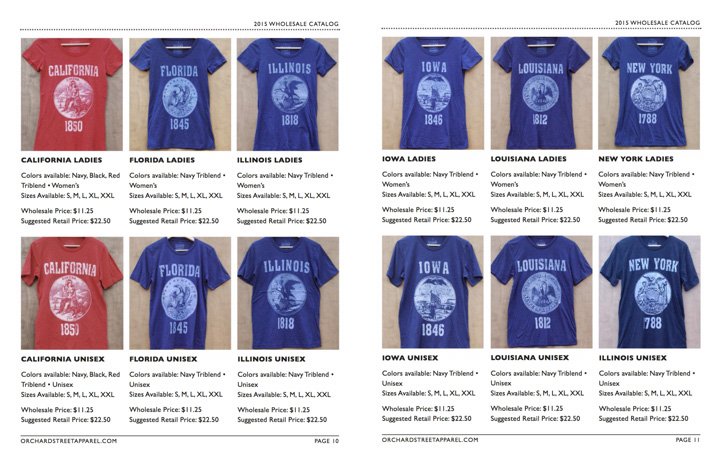
Apparel wholesale line sheet example
An apparel line sheet divided into picture, title, description and prices.

A strong apparel line sheet splits every product into four clear parts: the picture, the title, the product description and the prices. The biggest pitfall is inconsistent photography — mismatched backgrounds and wrinkled garments make a line sheet look unprofessional. Titles should stand out, and every product needs a SKU so wholesale orders stay error-free.

List both wholesale prices and suggested retail prices clearly. Description should show available sizes and colours, and for apparel it helps to call out materials too. Need a starting point? Our line sheet template is ready to customise.
Jewelry line sheets

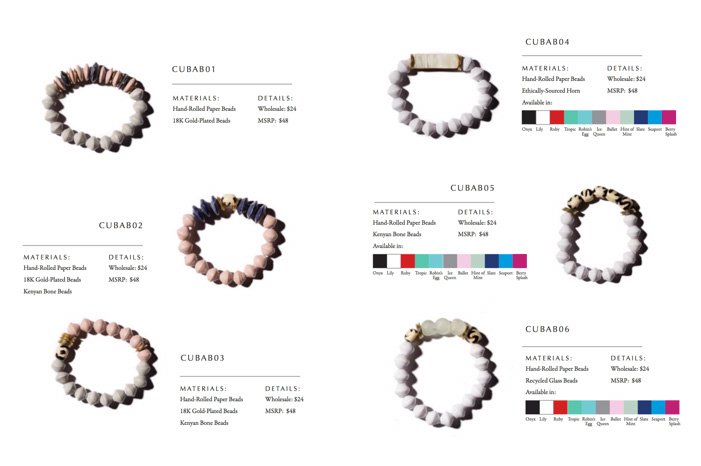
Jewelry catalog template example
A jewelry line sheet with consistent, professional product photography.

The best jewelry line sheets win on photography: a consistent white background with a soft shadow behind each piece looks professional and builds trust. Materials are listed clearly, and a colour gradient swatch shows available finishes at a glance — faster and more useful than plain text.

Wholesale prices and MSRP are easy to find, and an elegant serif typeface matches the products. The one thing to add: a SKU on every item so buyers can order without confusion. Pair your line sheet with a ready-made order sheet to capture wholesale orders cleanly.

How it works

From products to print-ready PDF

Skip the blank template. Build a catalog, line sheet or lookbook automatically from the products you already sell.

1

Connect your products

Import your catalog from your online store or a spreadsheet — titles, images, SKUs, prices and variations come along for the ride.

2

Pick a template

Choose a retail catalog, wholesale line sheet, lookbook or order sheet layout, then customise colours, fonts and branding.

3

Generate & share

Export a print-ready PDF in minutes, share it online, and regenerate any time your prices or products change.

Free sample

Download a fashion line sheet example

Made it this far? Here's an example line sheet created with Now In Store that you can use as inspiration for your own catalog template.
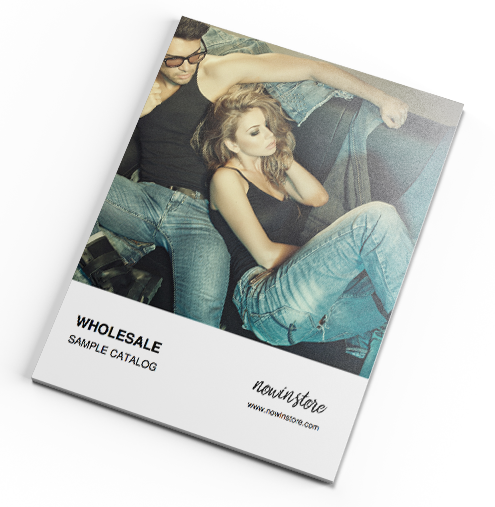
Fashion catalog template example

Fashion line sheet example (PDF)

A ready-made fashion line sheet showing how to lay out products, SKUs and wholesale pricing. Use it as a reference while you build your own.

Download the PDF
FAQ

Catalog template questions

What is the difference between a line sheet and a catalog? +
A wholesale line sheet is a compact, information-dense document built for buyers — it lists every product with its title, SKU, MSRP, materials and variations. A retail catalog or lookbook is more visual, designed to showcase collections and your brand to end customers with larger imagery and fewer products per page.
What should a good catalog template include? +
For a retail catalog, put the emphasis on product pictures (8–9 products per page max) and make prices stand out. For a wholesale line sheet, include the product title, SKU, MSRP, materials and available variations so buyers can place an order with no back-and-forth.
When should I use a lookbook instead of a line sheet? +
Use a lookbook when the goal is to promote your brand rather than take orders. Lookbooks lean on full-page lifestyle imagery with minimal text and usually open with a profile page telling your story. Use a line sheet when wholesale buyers need to actually order from a structured product list.
Is it cheaper to use a free template or catalog software? +
A free template costs nothing up front, but building the catalog by hand takes hours and is prone to errors. Professional design can run around $2,500 for a 12-page catalog, while Now In Store creates custom templates from under $700 and generates a 12-page catalog in about an hour — and you can regenerate it whenever prices or products change.
How do I create a catalog automatically from my store? +
Import your products, pick a retail catalog, line sheet, lookbook or order sheet template, customise the branding, and export a print-ready PDF. Titles, images, SKUs and prices are pulled from your product data, so there's no copy-pasting. Start a free trial to try it.

Skip the blank template. Build your catalog automatically.

Turn the products you already sell into retail catalogs, wholesale line sheets, lookbooks and order sheets — print-ready in minutes.
